What is included
A scope built around the room.
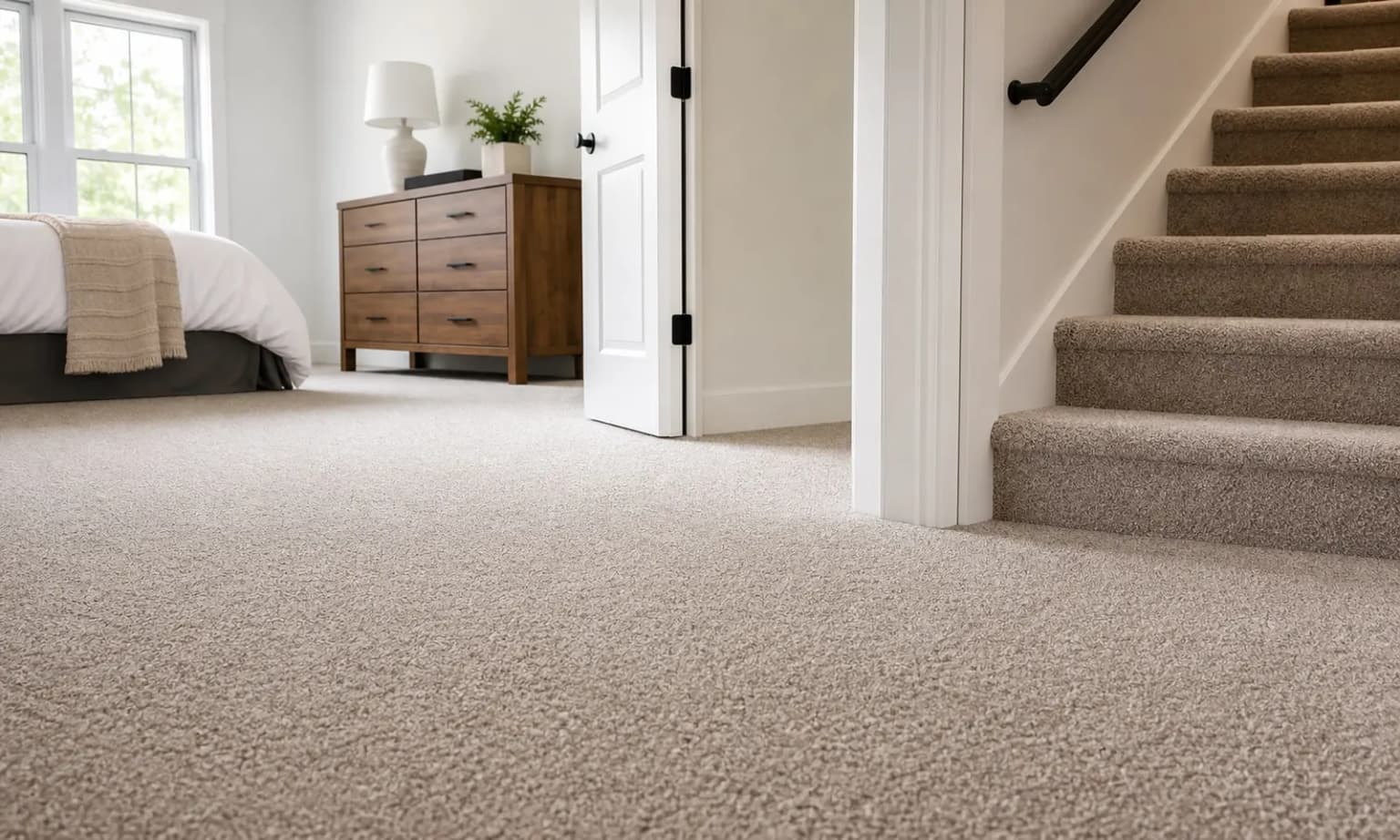
- 01Bedrooms, basements and rec rooms
- 02Stairs, landings and runners
- 03Cushion and underpad selection
- 04Power stretching and seam planning
- 05Old carpet removal and disposal
- 06Low-emission product options
The cushion matters more than the carpet
Most carpet that wears out early was not defective, it was under-supported. Cushion that is too thick or too soft lets the carpet backing flex with every step until the fibres break down, and manufacturers set maximum thickness and minimum density for exactly this reason. Using the wrong pad can void the carpet warranty outright. On stairs the requirements are different again, because a thick soft pad is a safety problem underfoot. We match the cushion to the carpet specification rather than upselling the plushest one on the rack.
Power stretching, not kicking
Carpet has to be stretched across the room with a power stretcher and secured to tack strip so it stays taut through seasonal humidity change and years of traffic. A knee kicker alone cannot develop enough tension in a room of any size, and the result shows up as ripples and buckles across the middle of the floor within a couple of years. Restretching later is possible but it is a second cost that a correct first install avoids entirely. Ask any installer directly whether they power stretch.
Seams are planned before the carpet is cut
Broadloom comes in fixed widths, so most rooms need at least one seam. Where it lands is a decision: away from the main sightline, running with the light rather than across it, never in a doorway or a high traffic pivot point. Pattern carpet needs the repeat matched, which adds material and time. We plan seam placement on a room diagram before cutting, because once a roll is cut the options are gone.
Stairs, landings and the details
Stairs take more wear than any floor in the house and are the most demanding carpet install. Waterfall and cap-and-band are the two common methods, and the choice affects both the look and the material quantity. Every tread needs the carpet pulled tight over the nosing, and open sides, winders and pie-shaped treads each need individual fitting. If the stairs are the only carpet in an otherwise hard-surface home, they are worth spending on, because that is where every guest looks.
Air quality, allergies and the honest tradeoff
Carpet traps dust and dander, which is either a benefit or a problem depending on your view and your vacuum. It holds particles out of the air until disturbed, and regular vacuuming with good filtration removes them. Products certified under a recognised low-emission programme have been tested for their contribution to indoor air quality. For a household with serious allergies we will usually suggest hard surface in living areas with washable rugs, and keep carpet to bedrooms.
Standards and references
Where we cover
Carpet across the GTA.
Questions