What is included
A scope built around the room.
- 01AC wear rating guidance
- 02Water-resistant core options
- 03Underlay and vapour barrier
- 04Over existing hard surfaces
- 05Stair treads and nosing
- 06Fast turnover for rentals
Read the AC rating before the price tag
Laminate is graded for abrasion and wear on an AC scale. The lower grades are built for light residential traffic and will show wear in a hallway or a kitchen within a couple of years. The higher residential and light commercial grades are what belong in a busy family home, a rental or anywhere with a dog. The difference in cost per square foot between a grade that survives and one that does not is usually small, and it is the single cheapest upgrade on the whole job.
Water resistant, water proof, and the fibreboard truth
Most laminate has a fibreboard core. If water gets into a seam and stays there, that core swells and the edge lifts, and there is no sanding or drying fix for it, only replacement. Newer water-resistant products use treated cores and tighter seam seals and genuinely perform better against spills, but they are still not the equal of vinyl in a room that regularly sees standing water. For a full bathroom or a basement with a history of water, we will recommend vinyl or tile instead, even though it is a smaller sale.
Underlay does four jobs at once
Underlay cushions the click system, quietens the floor, evens out minor subfloor variation and, where required, provides the vapour retarder over concrete. Some laminate ships with a pad already attached, in which case adding another one voids the warranty and makes the floor spongy. Over a slab, the vapour barrier is not optional. In a condo, the underlay usually also has to satisfy the building acoustic requirement, which is a different specification than comfort underfoot.
Where laminate beats the alternatives
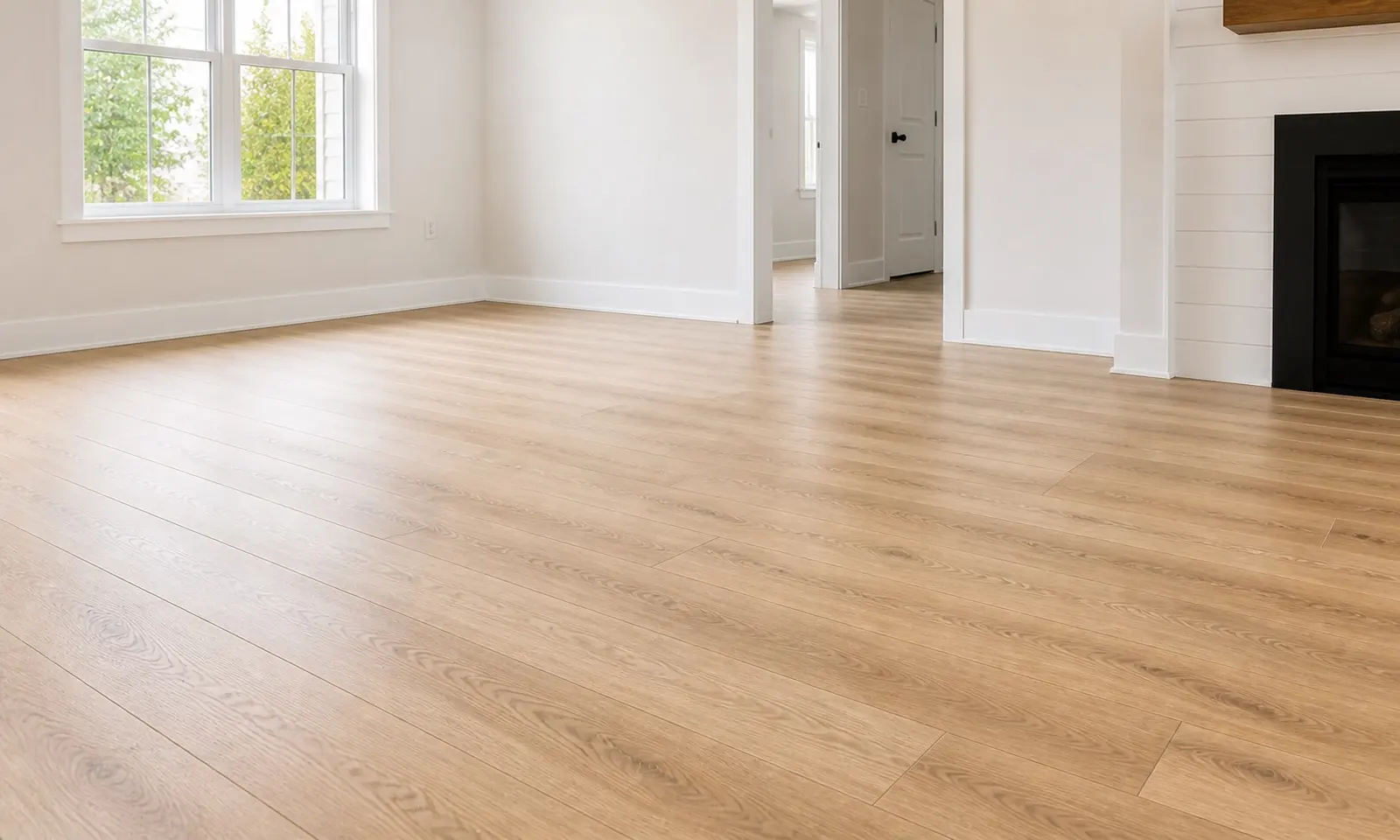
For a large area on a tight budget, laminate covers more ground per dollar than anything else that still looks good, and modern embossed textures with proper bevels are convincing at eye level. It is a strong choice for bedrooms, living rooms, hallways and rental turnovers. It is a weak choice where water pools, where you want a floor that can be refinished, and in a room where a heavy piece of furniture will sit on a floating floor and pin it in place.
Installation details that decide the outcome
Laminate is a floating floor, so it must be free to move: an expansion gap around the entire perimeter, gaps at every pipe and jamb, and no fasteners or heavy fixed furniture trapping it. Undercutting door casings gives a clean line no quarter round can match. Long runs need transitions at the manufacturer limit. And the subfloor still needs to meet the flatness tolerance, because a click seam is a hinge and every dip works it loose.
Where we cover
Laminate across the GTA.
Questions